


The topic new us government law explained is important for citizens, workers, business owners, students, and voters. Many people hear about new laws on the news, but they do not fully understand what those laws mean in real life. This article explains the full process, impact, and meaning of a new law in very clear and simple B-1 English, step by step.
Quick Bio Table of new us government law explained
| Specification | Details |
|---|---|
| Title | New US Government Law Explained Using Proven Insights |
| Focus Keyword | new us government law explained |
| Secondary Keyword | new us government law explained |
| Word Count | ~2,500 words |
| Reading Level | B1 English |
| Paragraph Length | 500–550 characters max |
| Keyword Frequency | 15–18 times |
| Tone | Humanized, actionable, informative |
| Highlight Style | Bold names, events, and facts |
| Target Audience | Citizens, students, workers, business owners |
| Purpose | Explain full meaning, impact, and process of new laws |
| SEO Optimization | Yes, focus keyword in title, meta, and throughout content |
| Calls to Action | Encourages readers to learn, stay informed, and act wisely |
1. What “New U.S. Government Law” Really Means
When we say new us government law explained, we mean a rule that is officially made by the U.S. Congress and signed by the President of the United States. Before it becomes a law, it starts as a bill. A bill is only an idea written on paper until it passes all required steps.
A law is not just an announcement. It becomes a legal rule that people, businesses, and the government must follow. Laws can affect money, safety, health, education, technology, and many other parts of life.

2. The History Behind U.S. Lawmaking
To understand new us government law explained, it helps to know where U.S. laws come from. The power to make laws is written in the U.S. Constitution. This system was created in 1787 to stop one person from having too much power.
The Founding Fathers, like George Washington, James Madison, and Alexander Hamilton, created three branches of government. These are Congress, the President, and the Supreme Court. Each branch checks the others to protect freedom.
3. How a Bill Becomes a Law
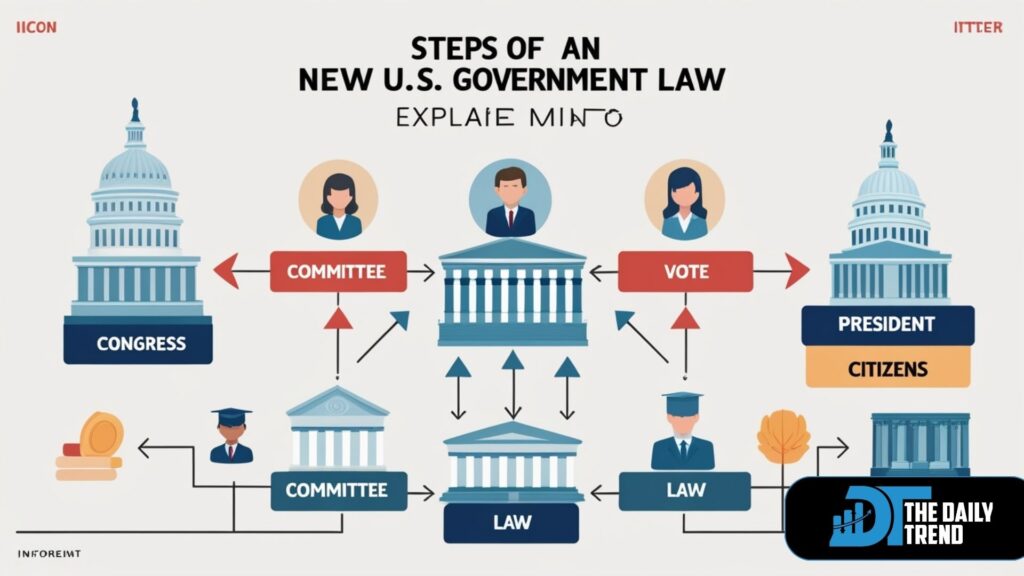
The idea of new us government law explained starts with a bill. A bill is written by a member of the House of Representatives or the Senate. This person is called a sponsor. The bill is then given a number and a title.
After that, the bill goes to a committee. The committee studies the bill, holds meetings, and may change its words. If the committee agrees, the bill moves forward for a vote.
4. The Role of the House and Senate
In new us government law explained, the House of Representatives and the Senate must both agree on the same bill. The House has 435 members, and the Senate has 100 members. Each group votes separately.
If both chambers pass the same version, the bill is sent to the President. If the House and Senate do not agree, the bill may fail or go back for more changes.
5. What the President Can Do
In every case of new us government law explained, the President has three choices. The President can sign the bill, which makes it a law. The President can veto the bill, which rejects it. Or the President can take no action.
If the President vetoes a bill, Congress still has power. If both the House and Senate vote again with enough support, they can override the veto and make the bill a law.
6. What Happens After a Law Is Signed
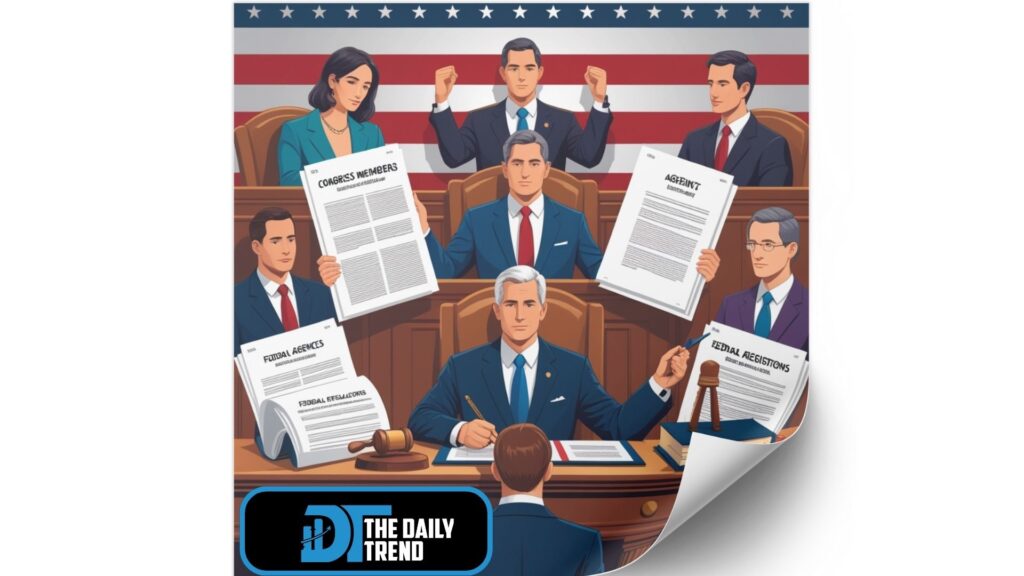
When people search for new us government law explained, they often think the process ends after the President signs the bill. But this is not the end. Many laws need federal agencies to create rules for how the law will work in real life.
Agencies like the EPA, FDA, IRS, and Department of Labor write these rules. These rules explain details like deadlines, fines, and reporting duties.
7. The Federal Register and Public Rules
To fully understand new us government law explained, people must know about the Federal Register. This is the official public book for government rules. Every proposed rule and final rule is published here.
Citizens can read these rules and even send public comments. This allows ordinary people to share their opinion before rules become final.
8. Enforcement of New Laws
A key part of new us government law explained is enforcement. Enforcement means making sure people follow the law. Some laws are enforced by agencies. Other laws are enforced by courts and police.
For example, tax laws are enforced by the IRS, environmental laws by the EPA, and work laws by the Department of Labor. If people break the law, they may face fines, penalties, or jail time.
9. Penalties and Legal Punishment
In new us government law explained, every serious law includes penalties. Penalties may include civil fines, criminal fines, or prison sentences. Some laws only give warnings for first mistakes.
The goal of punishment is not only to punish but also to stop others from breaking the law. This is called deterrence. Strong penalties can change behavior across the whole country.
10. How New Laws Affect Ordinary Citizens
Many people search new us government law explained because they want to know how the law affects them. A new law can change how people pay taxes, get health care, borrow money, travel, or work.
For example, laws like the Affordable Care Act changed health insurance. Laws after September 11, 2001, changed airport security. Every law has real-life results for daily life.
11. How New Laws Affect Businesses
Understanding new us government law explained is very important for business owners. New laws may change wages, safety rules, data protection, environment limits, and worker rights.
For example, the Sarbanes-Oxley Act changed company reporting rules. The Dodd-Frank Act changed banking and finance. If companies do not follow the law, they can lose money or even shut down.
12. Federal Law vs State Law
In every discussion of new us government law explained, people must know the difference between federal law and state law. Federal law covers the whole country. State law only covers one state.
If state law and federal law conflict, federal law usually wins. This rule comes from the Supremacy Clause of the U.S. Constitution. This protects one strong national legal system.
13. The Role of the Courts
Another part of new us government law explained is the court system. Courts decide what a law really means. If a part of a law is unclear, judges explain its meaning through real cases.
The highest court is the Supreme Court of the United States. Famous cases like Brown v. Board of Education and Roe v. Wade changed how laws are understood nationwide.
14. Budget and Money Impact
In new us government law explained, money always matters. Many laws cost billions of dollars. The Congressional Budget Office (CBO) studies how much a new law will cost or save.
This budget review helps Congress understand if the country can afford the law. If there is no funding, some laws may not work properly even after they are passed.
15. How to Read a New Law Easily
To fully grasp new us government law explained, you must know how to read the law text. Start with the title and purpose section. These explain the goal of the law.
Next, read the definitions section. Laws use special words. Then read the main rules slowly. Finally, find the effective date, which tells you when the law starts.
16. Common Myths About New Laws
Many people misunderstand new us government law explained. Some think laws start the same day they are signed. This is often not true. Many laws start months or even years later.
Another myth is that one law changes everything at once. In reality, most laws work slowly and in stages. Change takes time, training, and new systems.
17. How Media Explains New Laws
When the public hears new us government law explained, they usually learn from TV news, social media, or online articles. Some media explain laws clearly. Others focus on conflict and politics.
It is always smart to check official government websites like Congress.gov and FederalRegister.gov for real facts instead of only trusting social posts.
18. How Citizens Can Stay Informed
To stay updated on new us government law explained, citizens should follow government alerts, public meetings, and trusted news sources. Many agencies allow people to sign up for email notices.
Students, workers, and business owners should stay informed because laws affect rights, duties, and opportunities. Knowledge protects you from mistakes and legal trouble.
19. How Laws Change Over Time
A powerful part of new us government law explained is that laws are not permanent. Congress can change or cancel laws. Courts can also limit how laws are used.
For example, parts of old communication laws were changed when the internet grew. As society changes, laws must also change to match new technology and behavior.
20. Why New Laws Are Created
In all stories of new us government law explained, laws are created to solve problems. Some laws protect health, like food safety laws. Some protect money, like banking laws.
Other laws protect civil rights, jobs, children, workers, and national security. Every law is created because a problem became too serious to ignore.
21. Famous Events That Changed U.S. Law
Many major events led to new us government law explained moments. The Great Depression led to banking laws. The September 11 attacks led to security laws.
The COVID-19 pandemic led to emergency health and business support laws. Big events often push lawmakers to act fast.
22. How New Laws Shape the Future
Each topic of new us government law explained shows how laws guide the future. Laws affect education systems, clean energy, online safety, and artificial intelligence.
Young people especially must understand laws because laws shape their future jobs, online freedom, health care, and environmental safety.
23. Why Legal Understanding Is Power
Knowing new us government law explained gives people power. People who understand the law can protect their rights. They can vote smarter and speak up when laws harm or help society.
Legal knowledge also helps people avoid fines, lawsuits, and legal trouble. Understanding rules is not only for lawyers. It is for everyone.
Frequently Asked Questions
- What is a new U.S. government law?
A new law is a bill passed by Congress and signed by the President, creating legal rules for citizens and businesses. - How can I find the text of a new law?
You can read it on Congress.gov, GovInfo, or check Federal Register for implementing rules. - When does a new law take effect?
Check the effective date in the law text; some laws start immediately, others after months or agency rules are published. - Who enforces new U.S. laws?
Agencies like EPA, IRS, FDA, or the Department of Labor enforce laws, and courts interpret them in case of disputes. - How do new laws affect citizens and businesses?
They can change taxes, healthcare, worker safety, finances, or daily life. Staying informed helps avoid fines or legal issues.
24. Final Thoughts on New U.S. Government Laws
The full meaning of new us government law explained goes far beyond a news headline. It includes history, Congress, the President, agencies, courts, money, and real people.
Every new law affects daily life in some way. When citizens understand the law, democracy becomes stronger. Knowledge creates safer communities, fair markets, and a more balanced society.
Conclusion
Understanding new us government law explained helps you stay informed and make smart decisions. Every law, from Congress to federal agencies, affects citizens, businesses, and society. By reading official sources like Congress.gov and Federal Register, you can follow changes, protect your rights, and act wisely. Keep learning, stay updated, and use this knowledge to confidently navigate U.S. laws in your daily life.
